
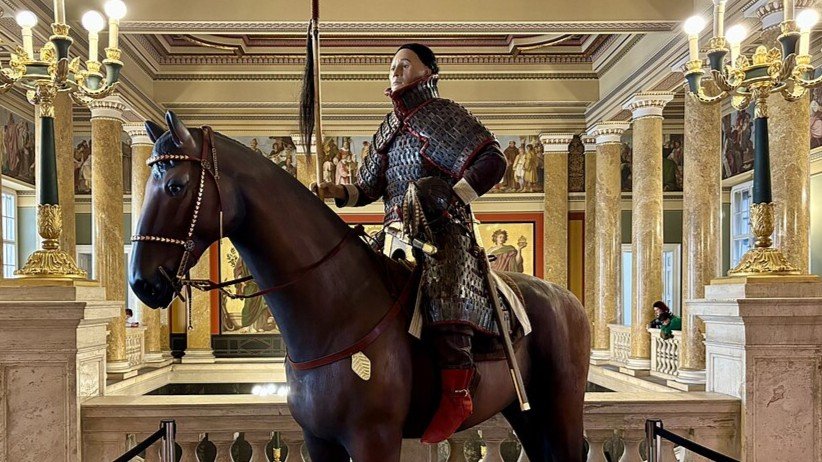
Early Migration and the Making of Europe
Prof Peter Heather,
Professor of Medieval History, King’s College London
Date: 21st of October 2026
Time: 20:00
Venue: Zoom
In this talk, historian Peter Heather challenges traditional narratives to re-examine the first millennium AD, an era defined by profound geopolitical transformation. His work traces how a continent once dominated by a single Mediterranean superpower—the Roman Empire—and surrounded by scattered subsistence farmers, evolved by AD 1000 into an interconnected network of distinct Christian states.
Central to this transformation was the controversial and often misunderstood phenomenon of large-scale human migration. Heather argues that early medieval migrations were not merely chaotic, destructive waves of barbarian invasions, but rather structured movements deeply influenced by the proximity of Rome itself. The economic and military gravity of the Roman superpower fundamentally changed the behavior of peripheral societies. To survive, compete, or capitalize on Roman wealth, peripheral elites were incentivized to consolidate power, turning fragmented tribal groups into larger, more cohesive political confederations.
Ultimately, Heather frames this historic shift as an early form of globalization. In this view, underdeveloped societies outside the imperial borders did not just destroy Roman infrastructure; they adapted to it, consolidated their own authority, and laid the institutional foundations for the modern European landscape.
About the speaker:
Peter Heather is Professor of Medieval History at King’s College London, joining the department in January 2008 as the Chair of Medieval History.
Professor Heather has specialised in the history of early Europe, focusing on the peoples and successor states after the decline of the Roman imperial period. He has tackled the issue of ‘barbarian’ peoples – a term first applied to migrating peoples from the east by the Greeks and which was adopted by the Romans to refer to ‘uncivilised’, ie, non-Roman, peoples who were to move into the vacuum left by the declining Empire, of which went on to form our modern nation states.
In recent years, his research has looked at propaganda in the late Roman elite and issues of migration and ethnicity among the groups who dismantled the western half of the Roman Empire.
This talk will be preceded by the AGM at 7:35.
Image attribution - "Nemzeti Múzeum - Attila-kiállítás - Hun harcos" by OrionNimrod is marked with CC0 1.0.
OTHER EVENTS
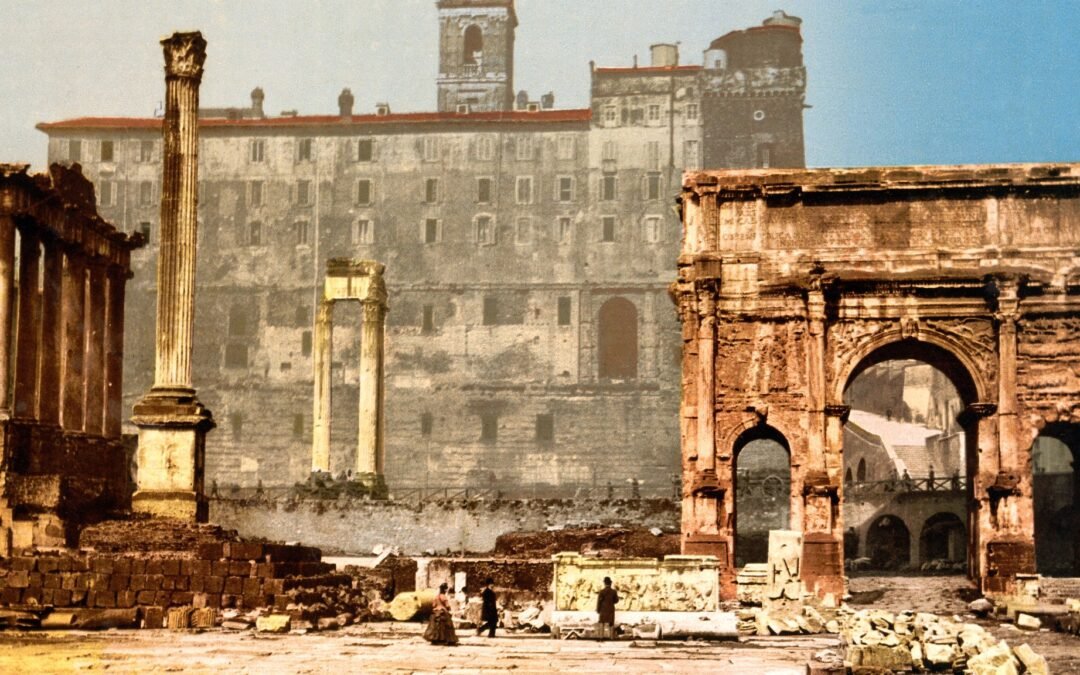
The African Emperor: The Life and Times of Septimius Severus
Date: 19th of November 2025
Time: 20:00
Venue: Zoom
Speaker: Dr Simon Elliott, Managing Director, Sentinel Communications
Septimius Severus was Rome’s black emperor. Born in the blistering heat of a North African spring in Leptis Magna, AD 145, he died in the freezing cold of a northern British winter in York in AD 211. A giant of an emperor, whose career can be counted in superlatives, Severus was in power at the height of Rome’s might. He led the largest army to ever campaign in Britain, comprising 50,000 men, part of a Roman military establishment which peaked at 33 legions under his rule.
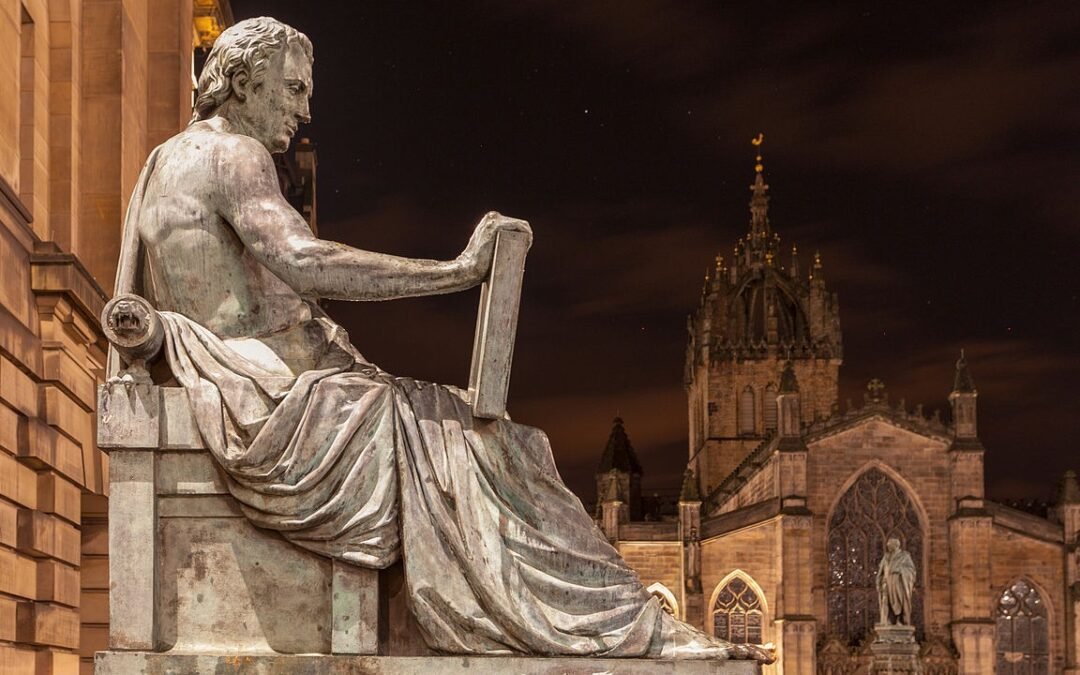
The End of Enlightenment: Empire, Commerce, Crisis
Date: 17th of December 2025
Time: 20:00
Venue: Zoom
Speaker: Prof Richard Whatmore, School of History, University of St Andrews
The Enlightenment is popularly seen as the Age of Reason, a key moment in human history when ideals such as freedom, progress, natural rights and constitutional government prevailed. In this radical re-evaluation, historian Richard Whatmore shows why, for many at its centre, the Enlightenment was a profound failure.

Mrs Holmes Taught Sherlock all he Knew: Uncovering the Truth about Victorian Women Detectives
Date: 21st of January 2025
Time: 20:00
Venue: Zoom
Speaker: Dr Sara Lodge, School of English, University of St Andrews
A revelatory history of the women who brought Victorian criminals to account—and how they became a cultural sensation.